Amperage Requirements for Machine Tools
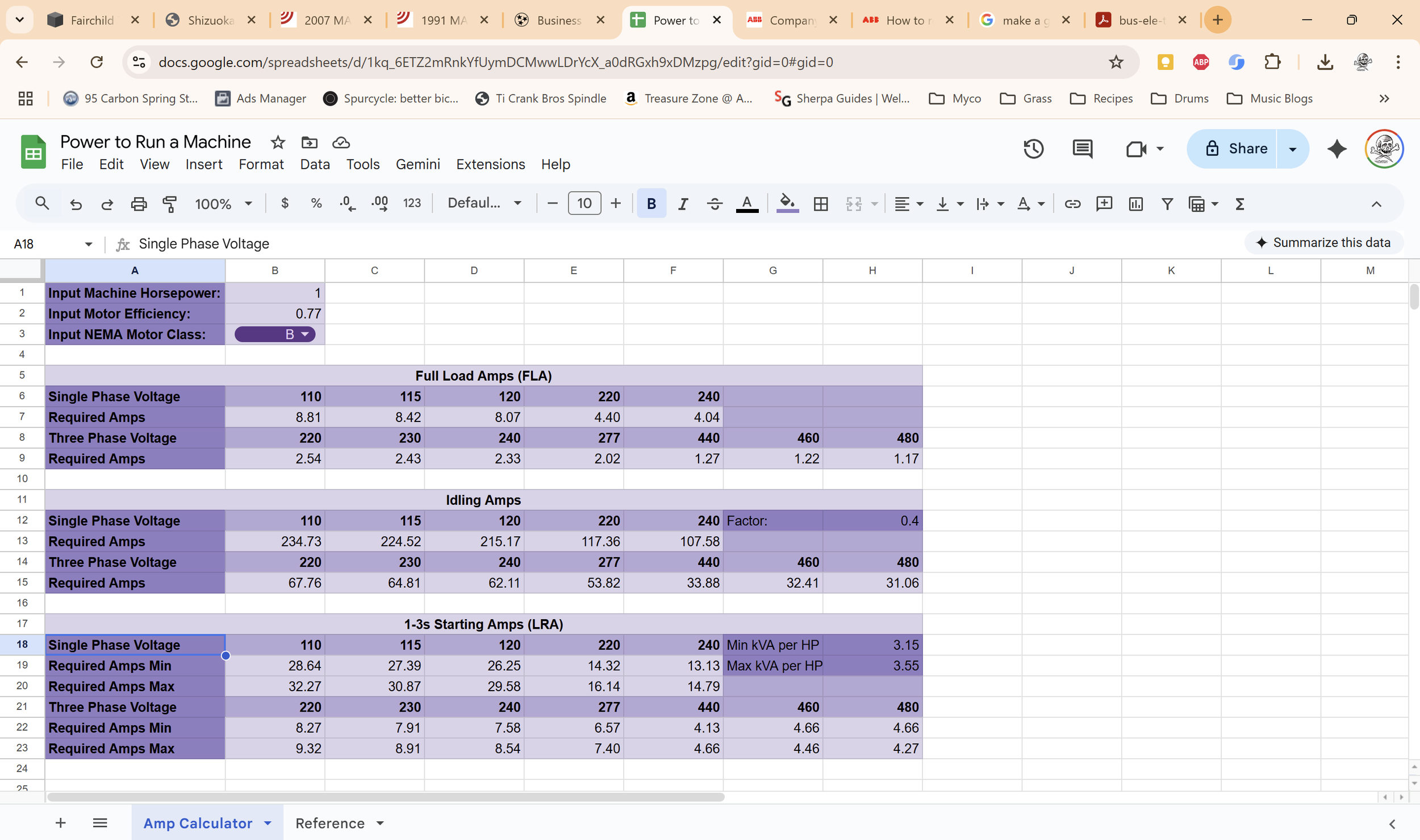
Can I run that machine in my shop? How big of a machine can I run on my main power? A piece of 6-gauge Romex costs how much? Now that I’ve started collecting machine tools, these questions come to mind all the time. I see these same questions posed frequently in Facebook groups and on forums for machinists and hobbyists. I have created a Google Sheets based calculator to help thinking through some of these questions. You can access it here.
When sizing the circuit to power a machine, we need to consider several interrelated factors to arrive at a cost effective but safe and functional solution. As voltage increases, amperage decreases. This allows smaller wire and fewer amps. For example my 7.5hp 480v 3-phase lathe only draws between 4.1-4.5 amps idling on the power cord from the transformer. From the rotary phase converter to the transformer, that load becomes more like 8.2 - 9 amps. On the other side of the phase converter the idling load from the lathe is now more like 14.3-15.5 amps. The transformer uses some energy as does the phase converter, but this is based on the formula
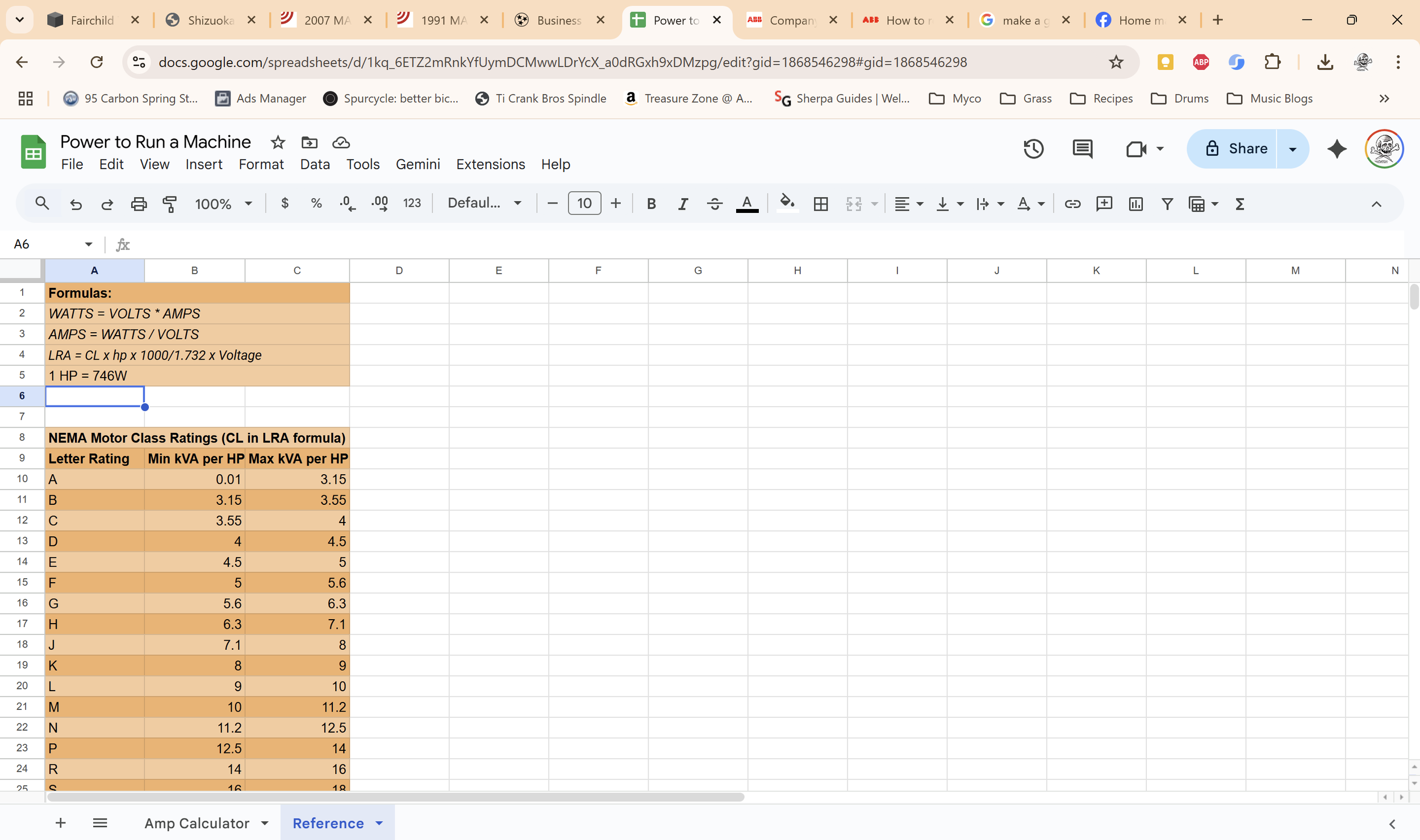
WATTS = VOLTS*AMPS and an estimation that it draws 40% of the Full Load Amps at idle. This could vary from machine to machine and motor to motor, but this is a reasonable estimate.
Full Load Amps (FLA) is the amount of electrical current an electric motor draws when operating at its rated voltage, frequency, and delivering its maximum specified horsepower, typically found printed on the motor's nameplate. You can expect to draw closer to this amperage when taking a cut that is slightly bogging the machine.
The third section of the spreadsheet is 1-3s Starting Amps (LRA). LRA stands for Locked Rotor Amps, and it is the maximum current an electric motor or compressor draws at the moment of startup when the motor is stalled and not yet rotating.
It is a good idea to compare the numbers that appear under the three different conditions to the the documents available from breaker manufacturers showing what they call a time current curve or trip curve. A breaker from a particular line of a given nominal amperage will handle different multiples of the nominal amperage for specified amounts of time. The manufacturer publishes this information using the trip curve.