1928 Chrysler Series 52
Distributor Housing Reproduction
Re-Engineering a 1928 Chrysler Series 52 Distributor Housing: From Pot Metal Crumbles to 3D Printed Stainless
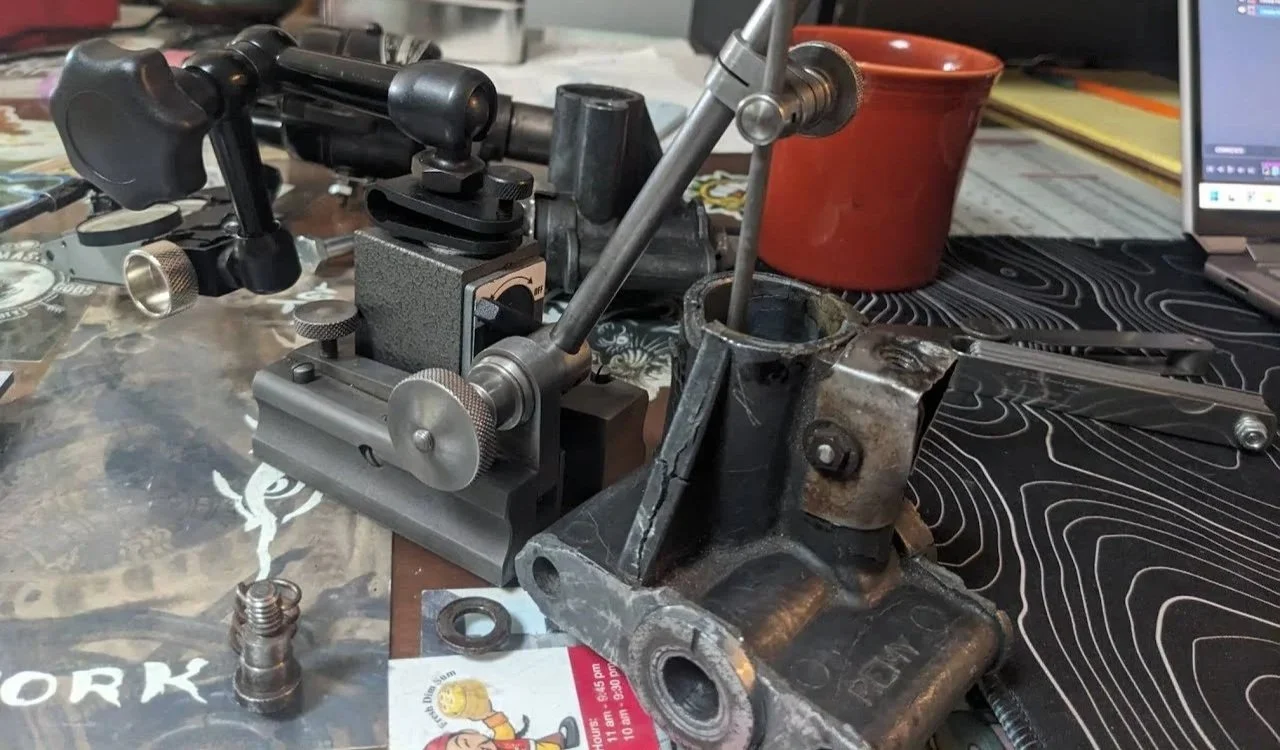
I’M a Sucker for an interesting project
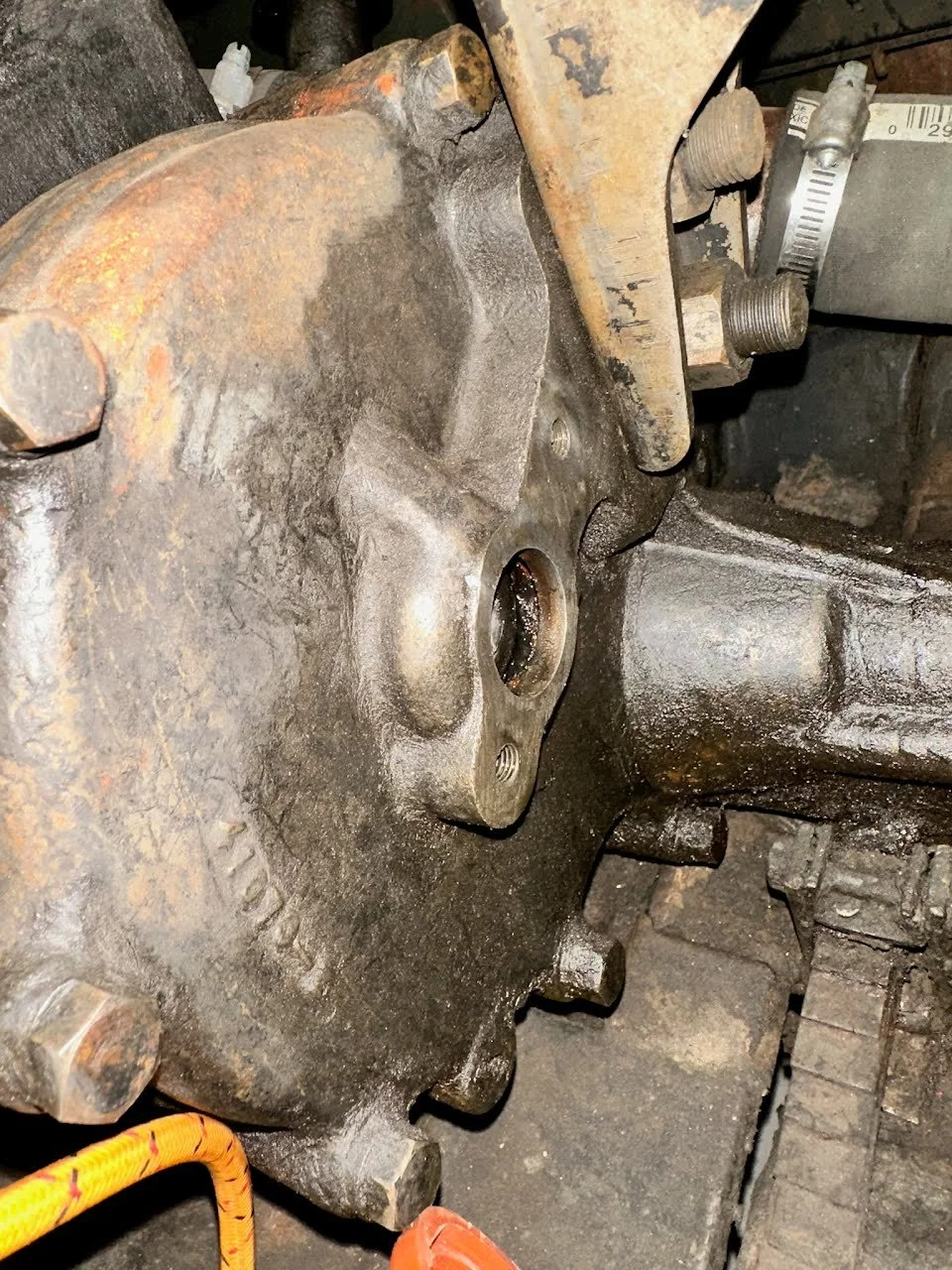
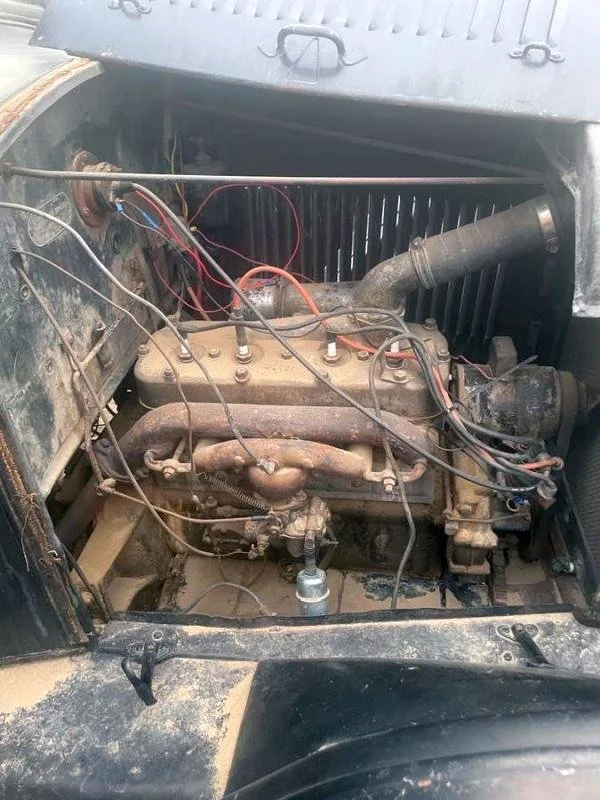
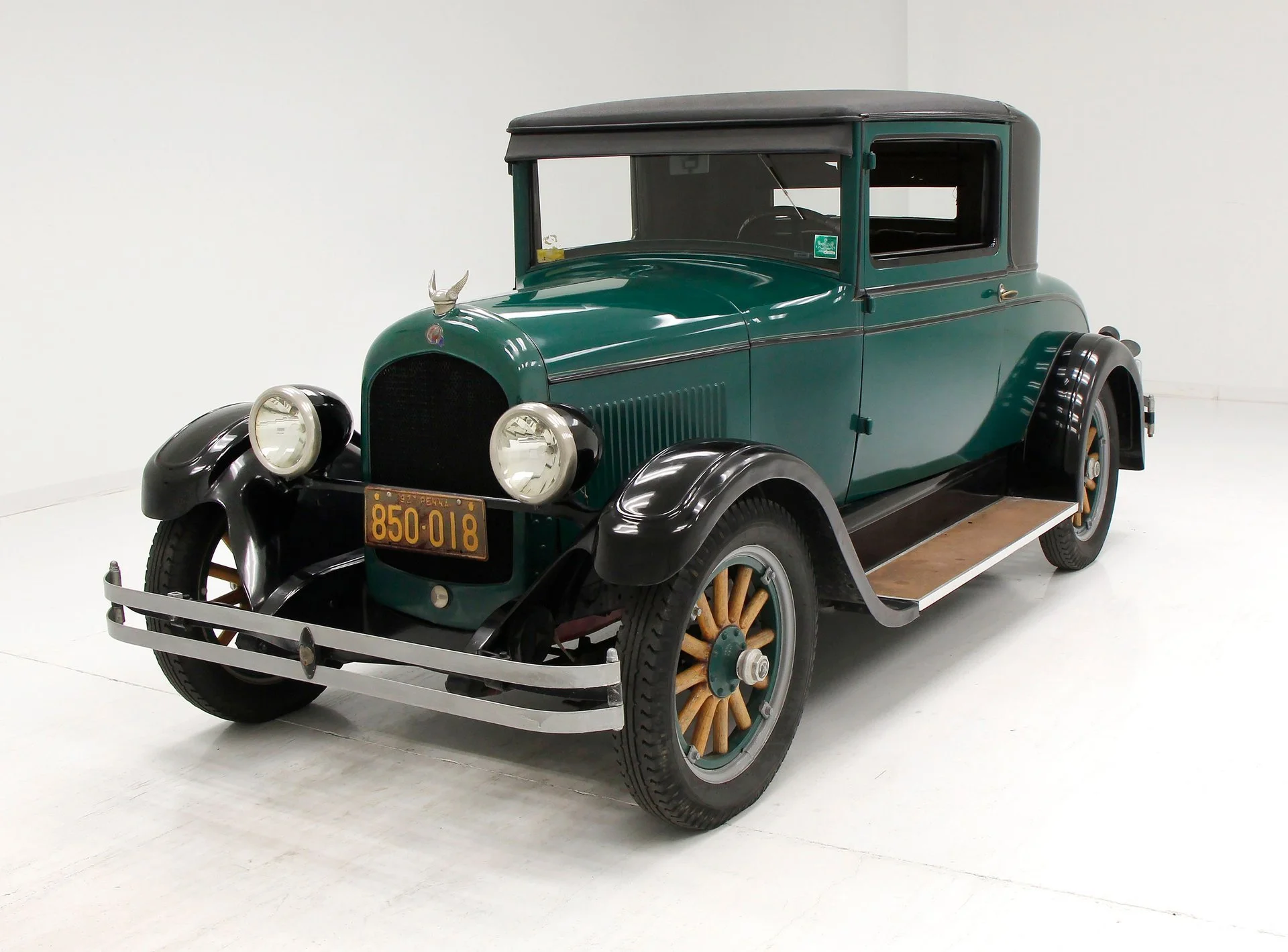
A client recently brought an unusual job into the shop: remaking a distributor mounting housing for a 1928 Chrysler Series 52 with the 170ci 4-cylinder engine.
The original Chrysler housing was disintegrating into pieces. Along with the crumbled housing, the client provided a non-crumbling original from a 1927 Maxwell with its distributor intact. The Maxwell unit offered a great starting point for geometric reference, but it presented a puzzle: the Maxwell housing is mirrored compared to the later Chrysler housing and carries several dimensional differences.
Here is a look behind the failure of these original housings, how the CAD model was reverse engineered, and how modern additive manufacturing is keeping this 1920s engine running.
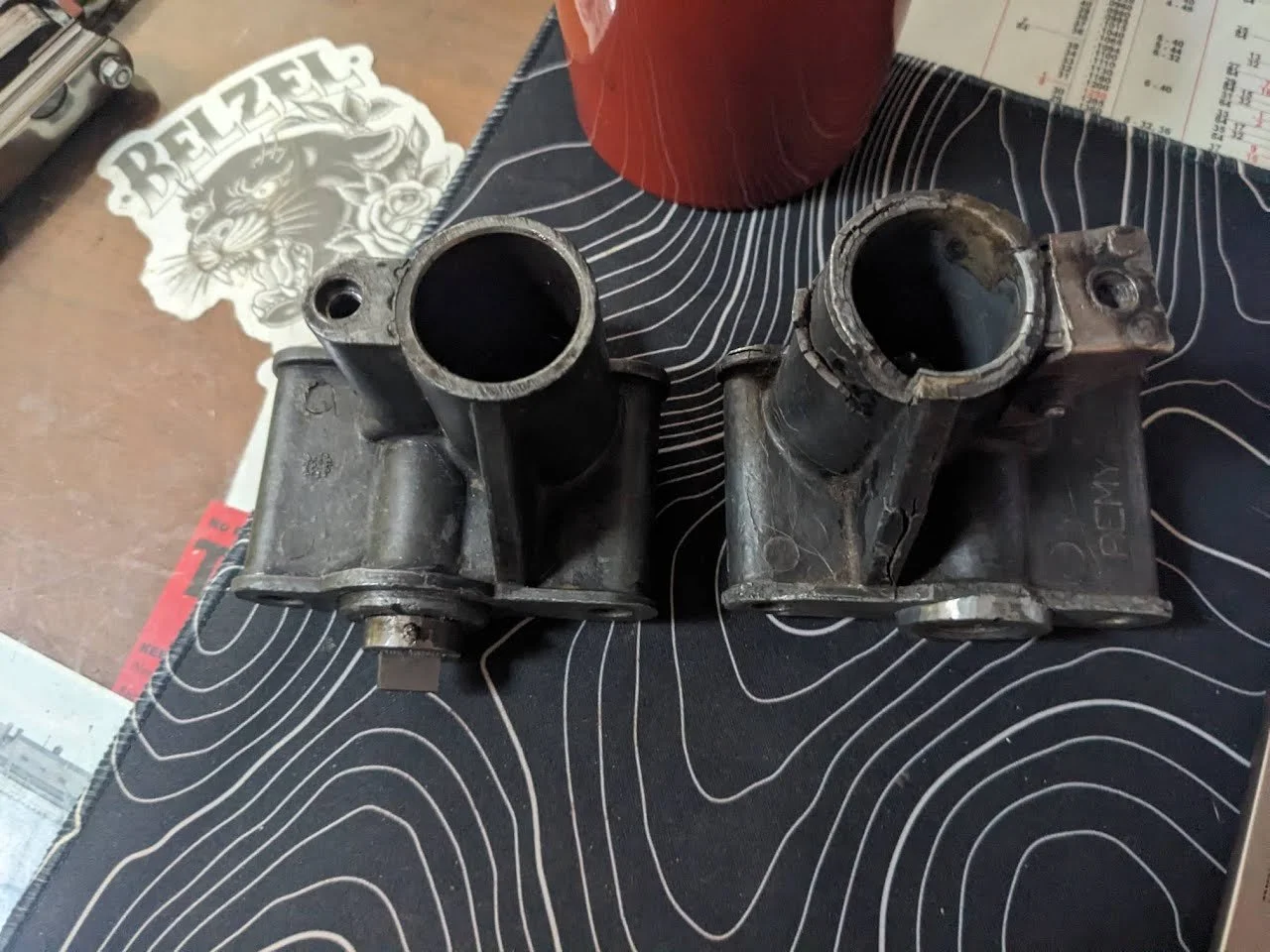
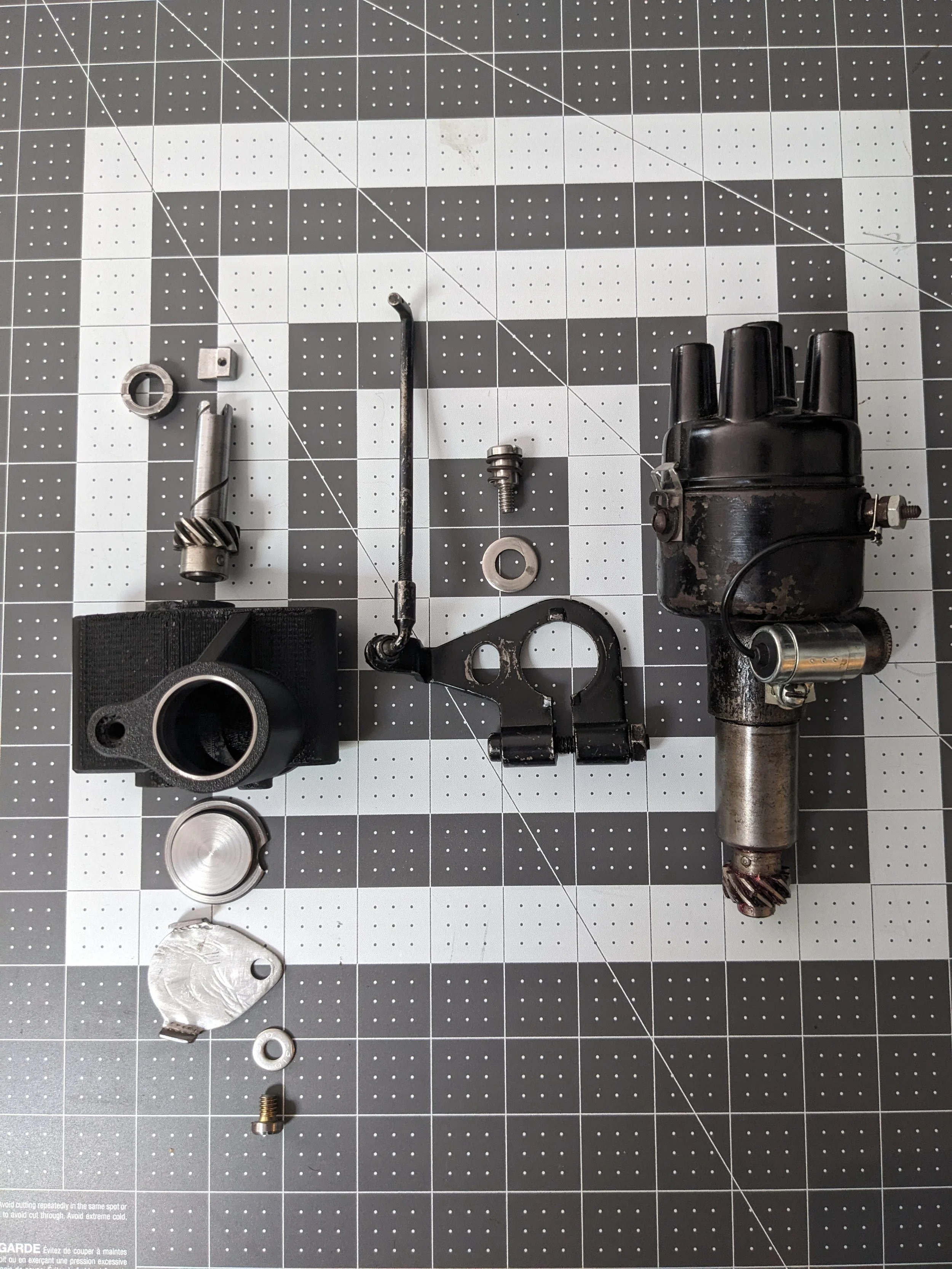
Why 1920s Distributor Housings Crumble: Zamak Rot and Early Metallurgy
If you have worked on late-1920s automobiles, you have likely encountered parts that swell, crack, and turn into gray powder when handled. This is what is known as intercrystalline corrosion, zinc pest or zamak rot.
During the mid-1920s, automotive die casting was a relatively new technology. Manufacturers were moving away from sand casting for small, complex parts to lower production costs and weight. Under the leadership of Walter P. Chrysler and his famous engineering trio (Fred Zeder, Owen Skelton, and Carl Breer), Chrysler heavily prioritized metallurgical experimentation and advanced testing.
However, during the production of the Series 50 and 52, standard zinc die-casting alloys were not yet fully refined. The "pot metal" mixes of the era often contained small trace amounts of lead, tin, or cadmium impurities. Over time, moisture in the air causes these impurities to react along the grain boundaries of the zinc crystal structure. The internal oxidation forces the metal to expand from within, causing structural cracks, distortion, and eventual collapse. High-purity zinc alloys like Zamak were not standardized until around 1929, leaving many 1924 through 1928 components susceptible to complete degradation.
Because zinc pest alters the internal chemical structure of the part, traditional welding or brazing cannot repair it. The only permanent fix is recreating the part from scratch in a stable material.
Reverse Engineering, Drive Shaft Repairs, and Manual Machining
Recreating an orphan part without original engineering drawings requires careful measurement, custom machining, and mechanical problem-solving.
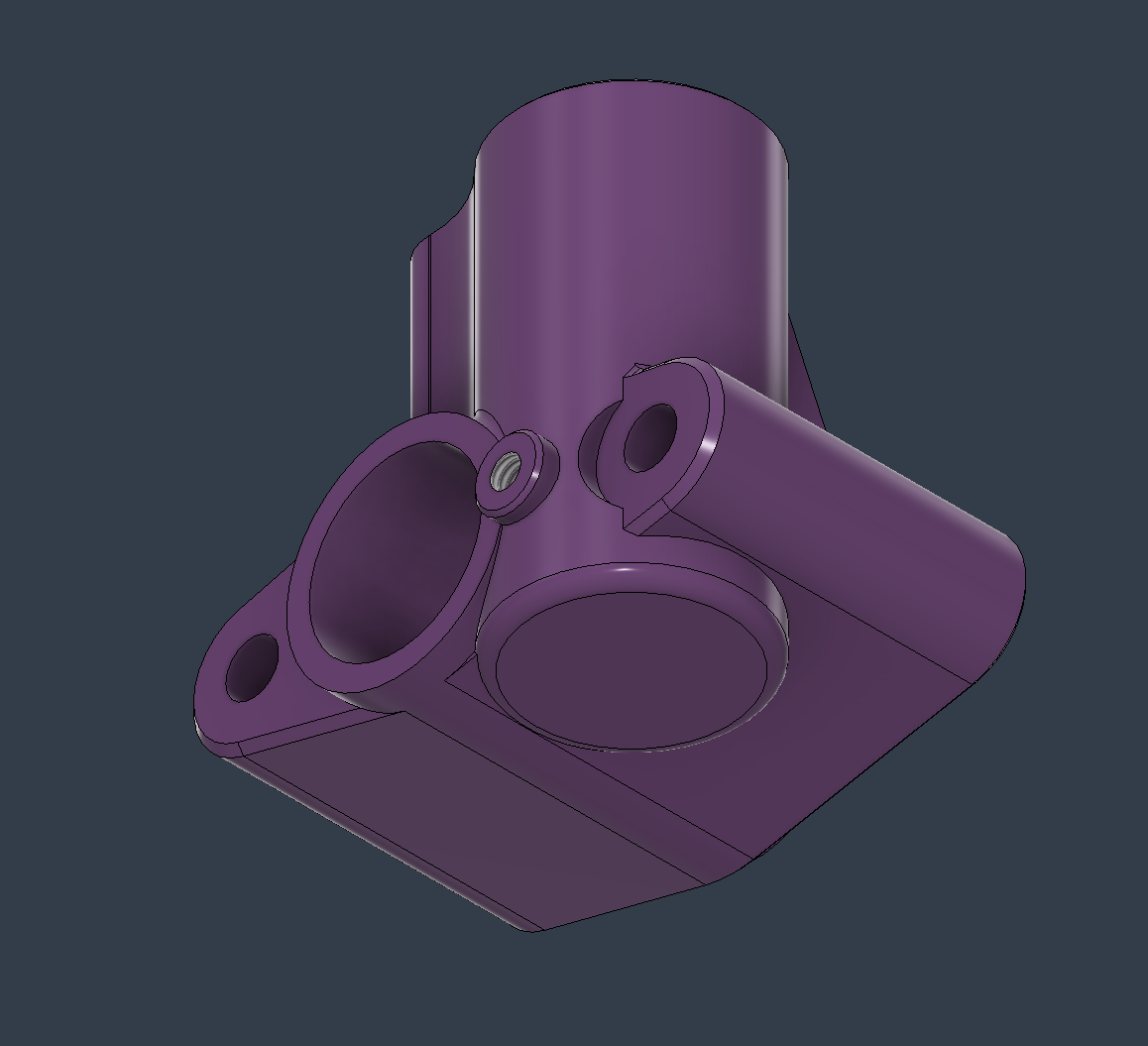
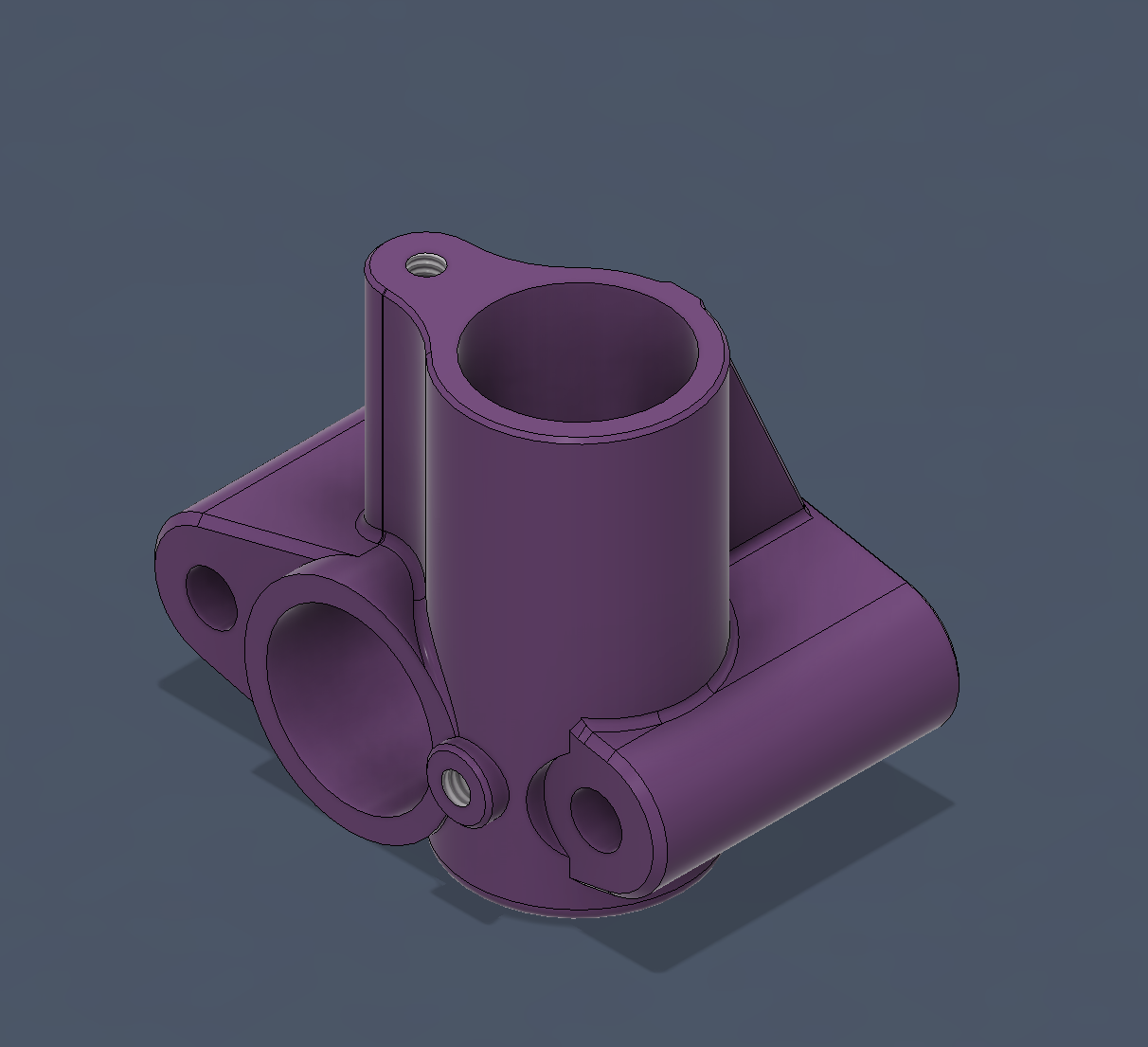
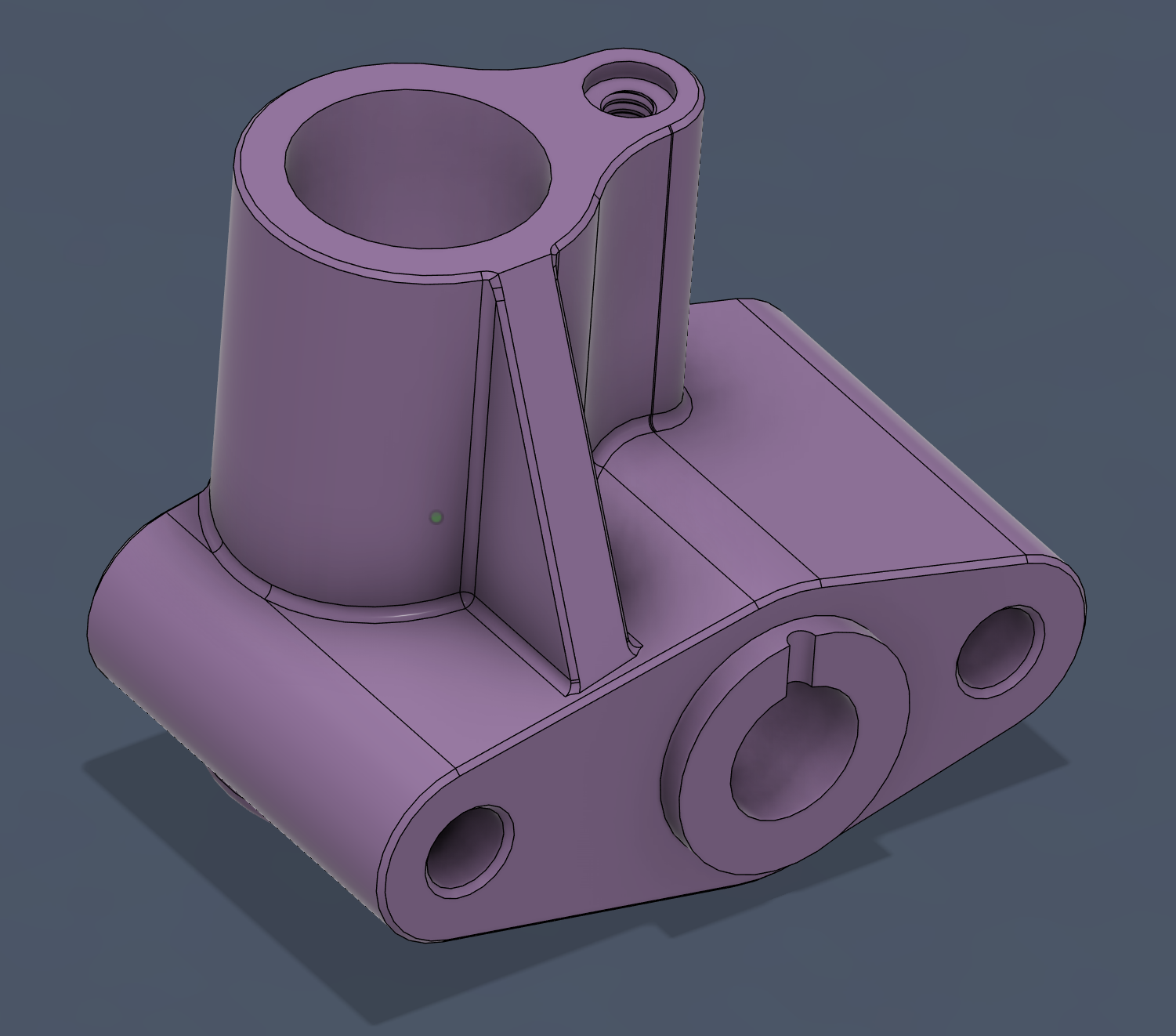
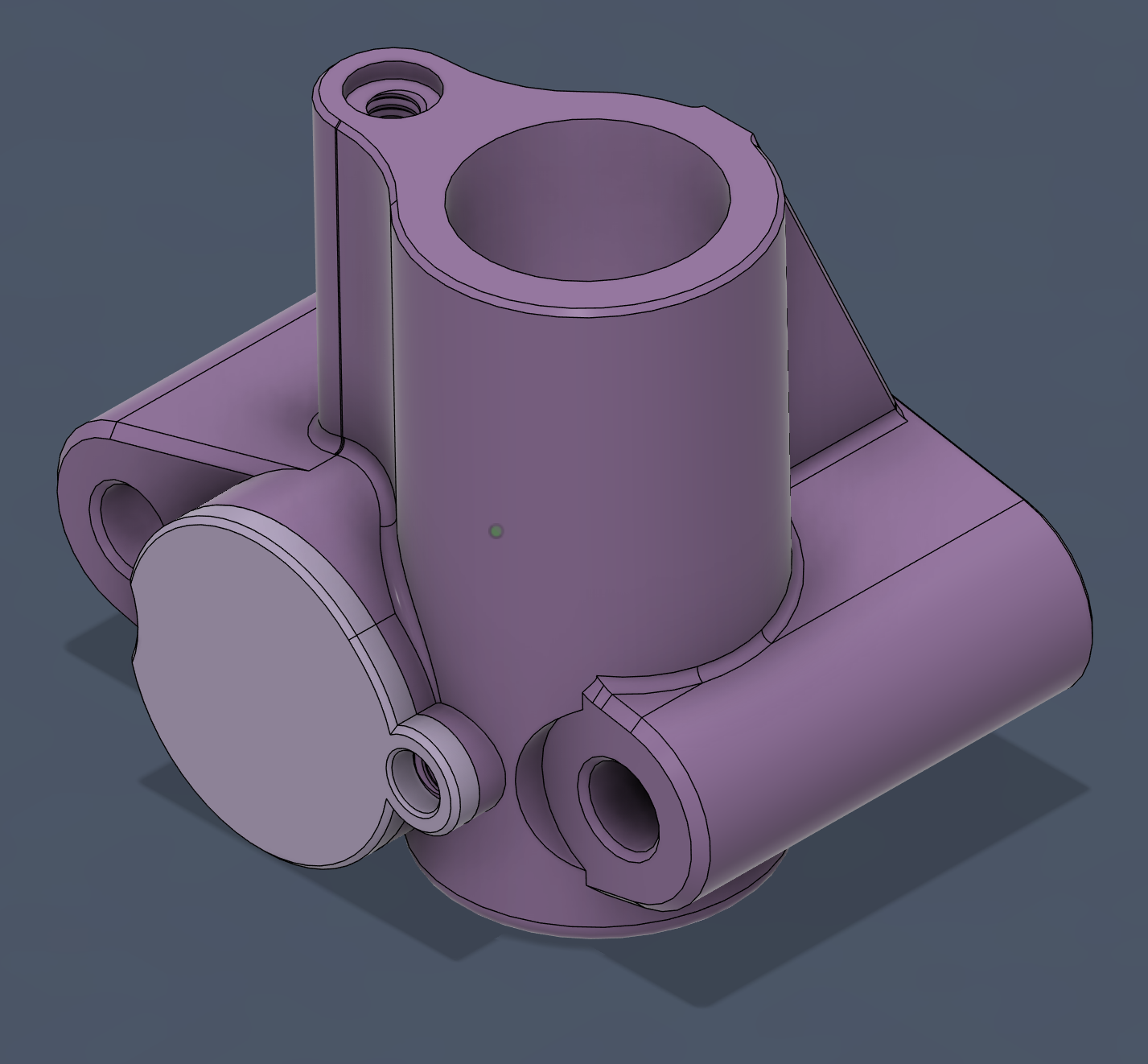
Using the crumbling 1928 Chrysler housing and the mirrored 1927 Maxwell housing as physical reference, key centerlines, mounting faces, and shaft bore diameters were measured and modeled in Autodesk Fusion. The new CAD model un-mirrored the Maxwell features and corrected dimensions to match the Chrysler block.
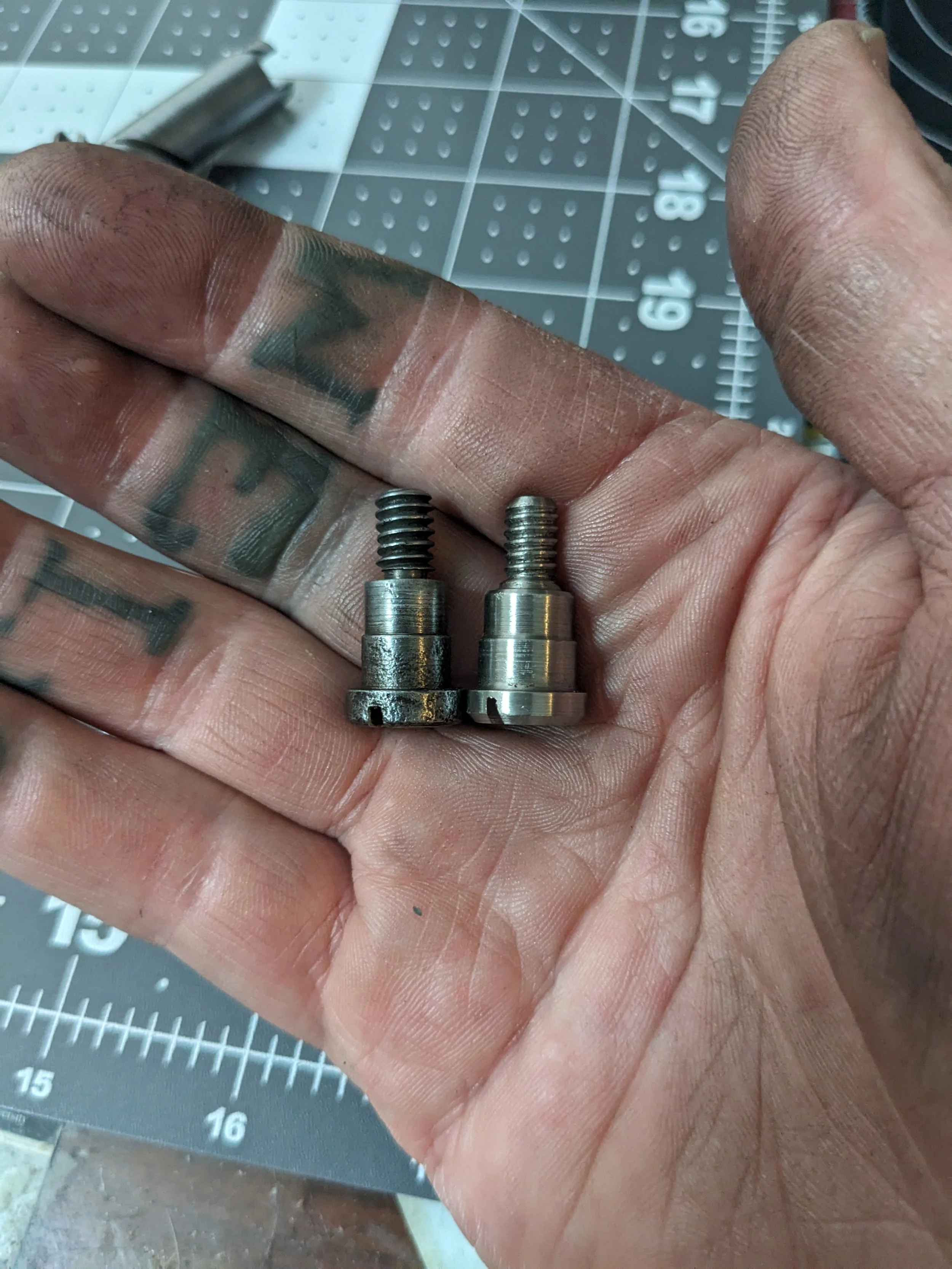
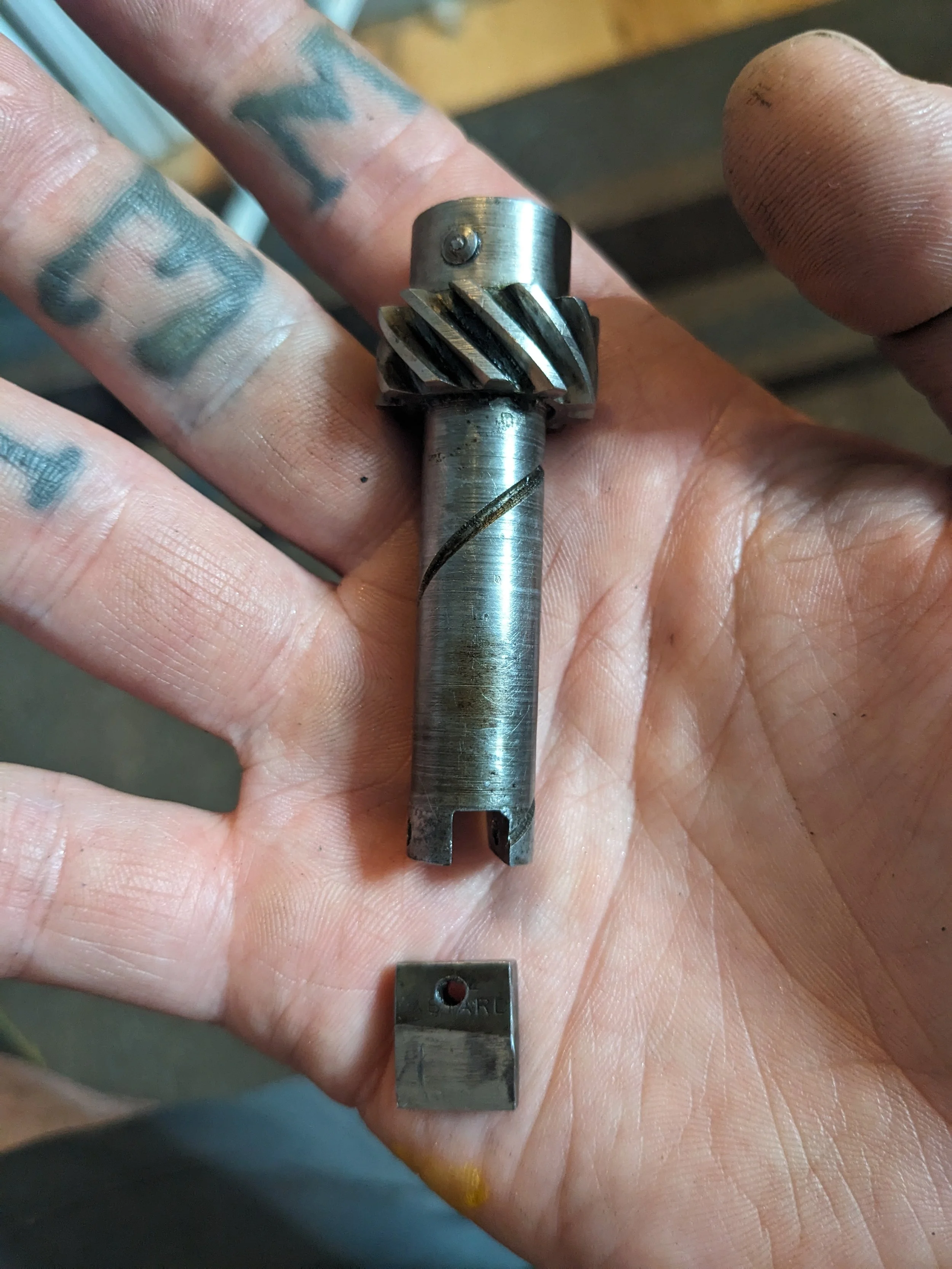
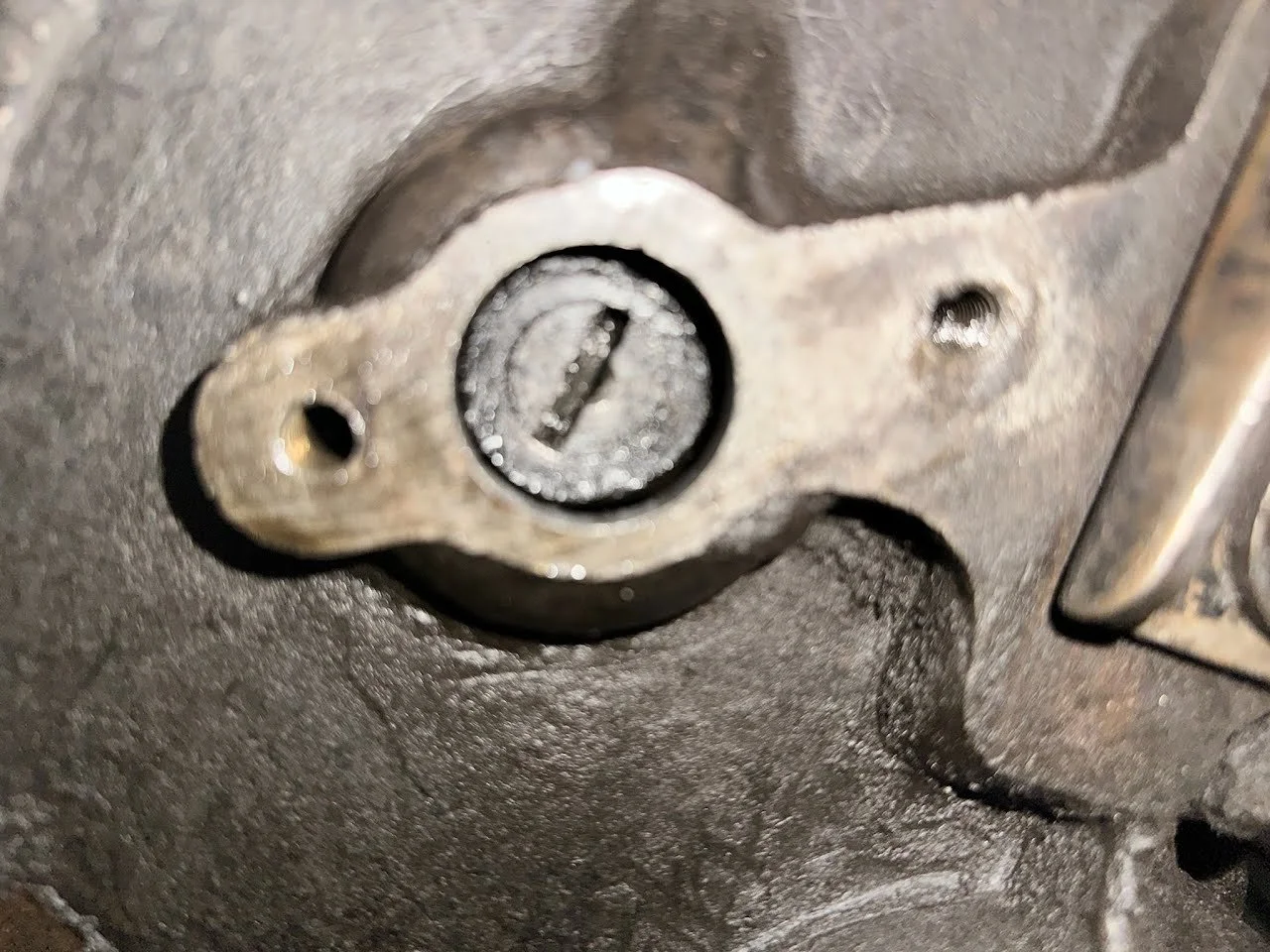
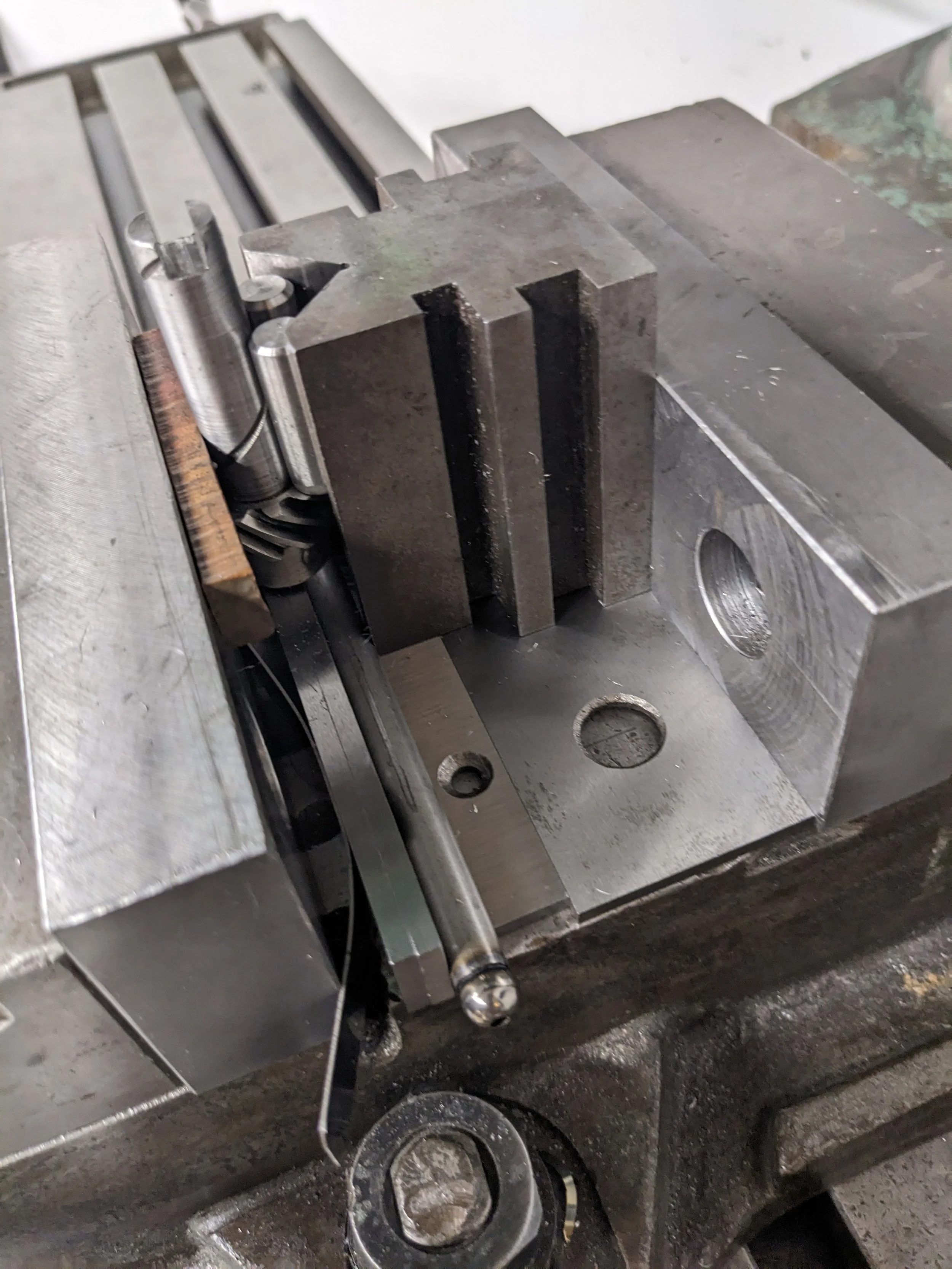
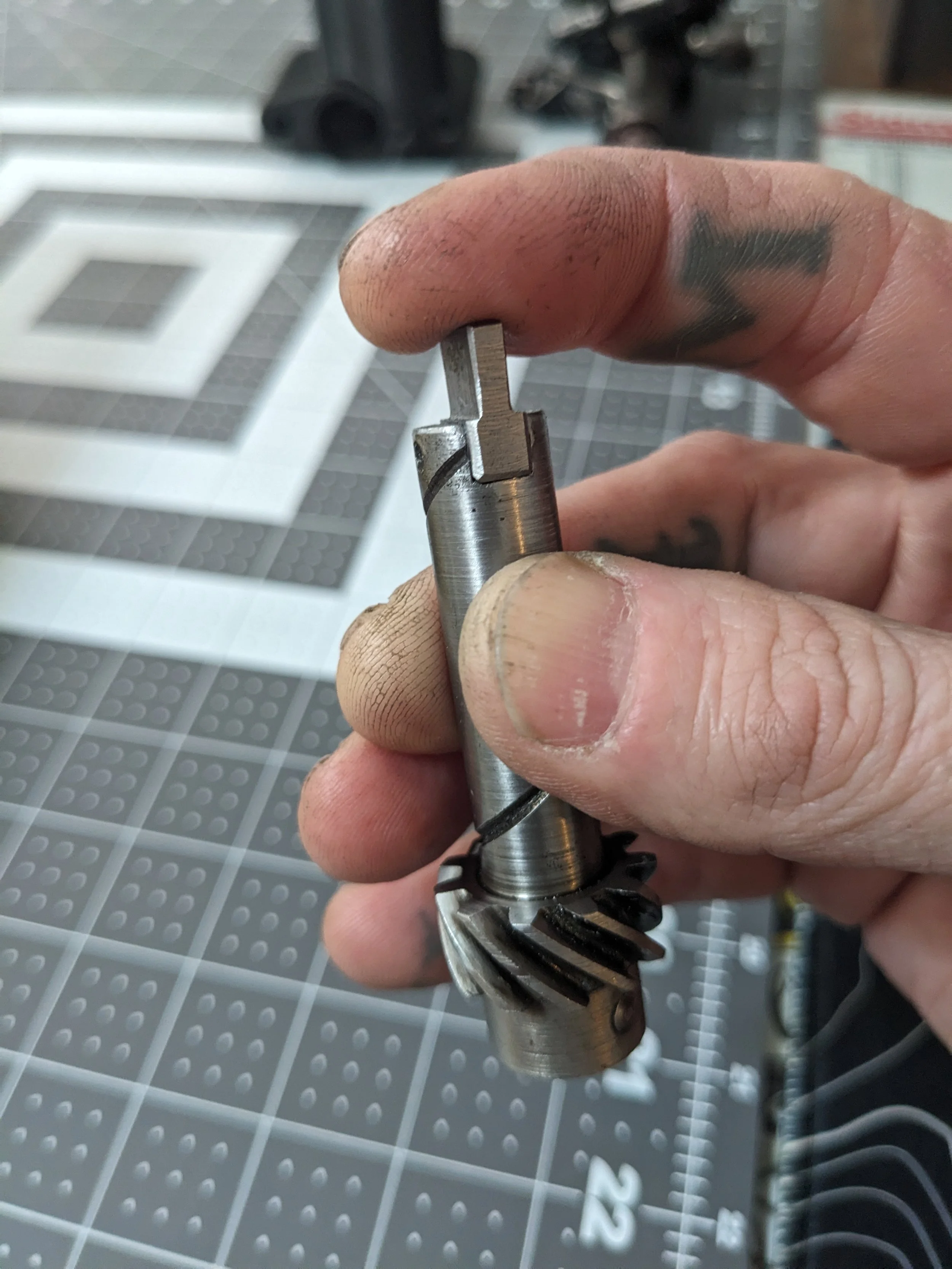
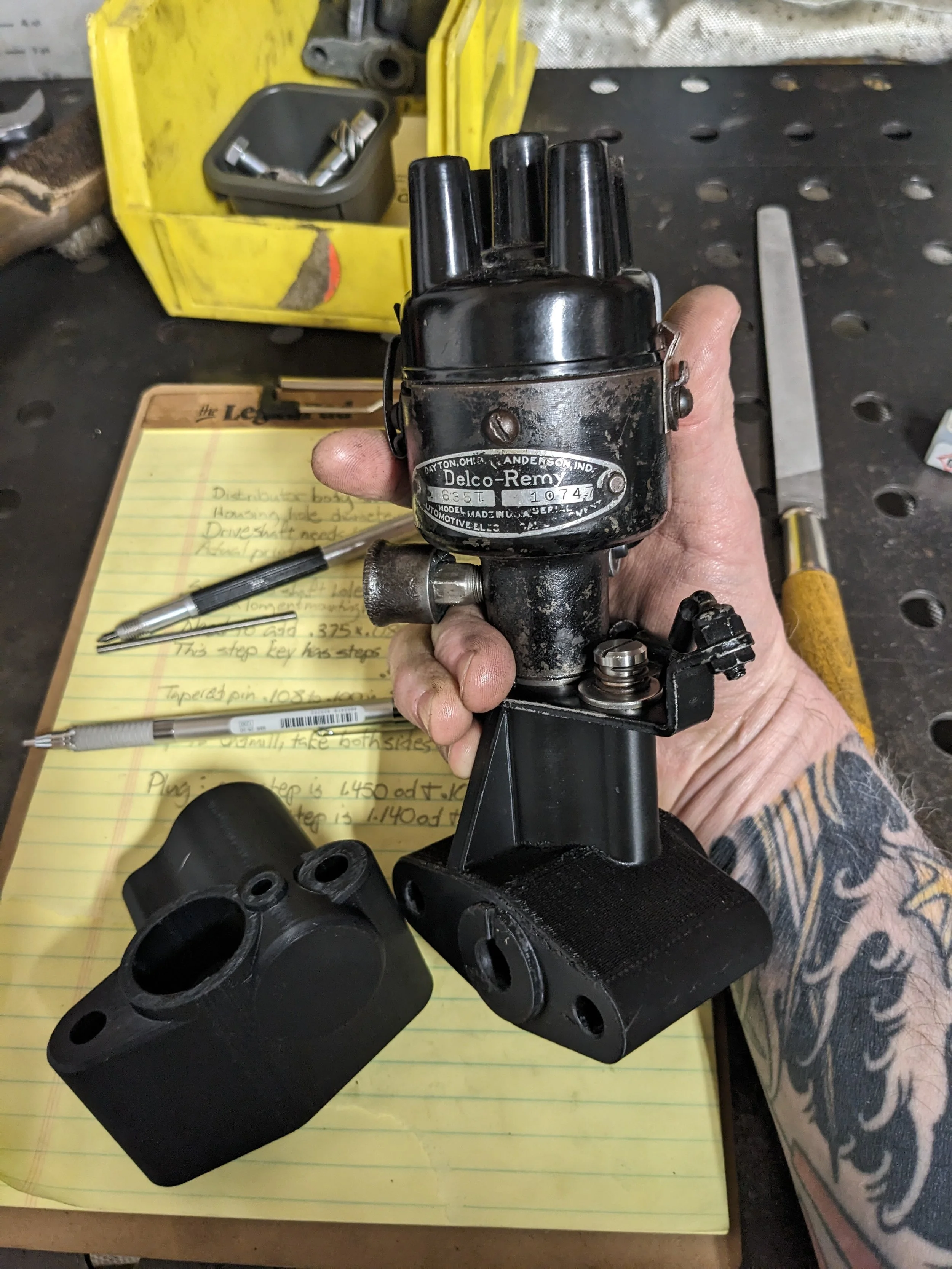
On this project, the drive shaft was noticeably worn, and the slot holding the drive key in the end of the shaft was deformed. Rather than scrapping the shaft, the worn slot was cleaned up and re-machined square. To connect the repaired shaft back to the engine, a custom stepped key was machined. This stepped key fits the original factory slot in the camshaft on one end, while stepping up to fit the newly machined, wider slot in the drive shaft on the other end.
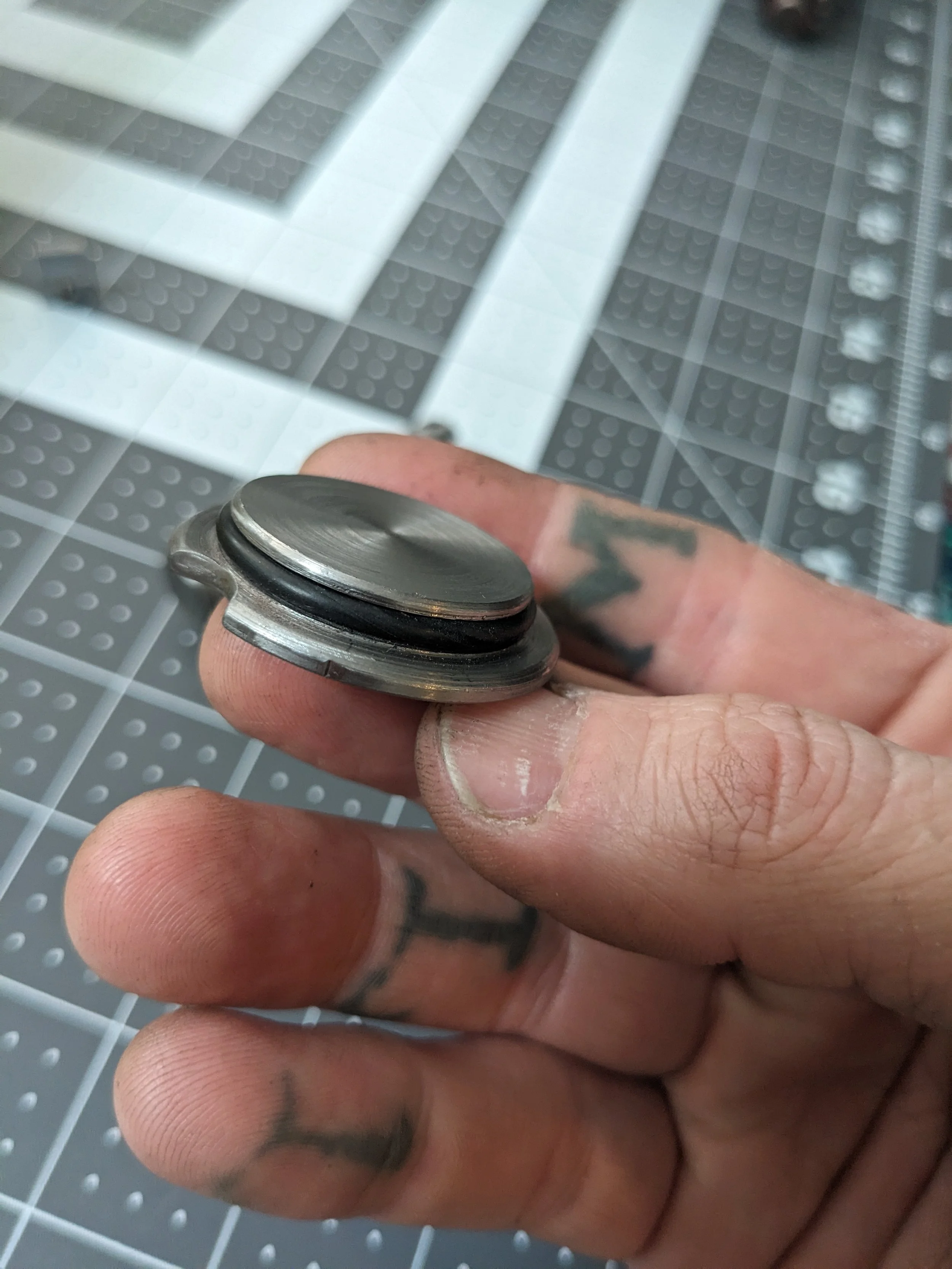
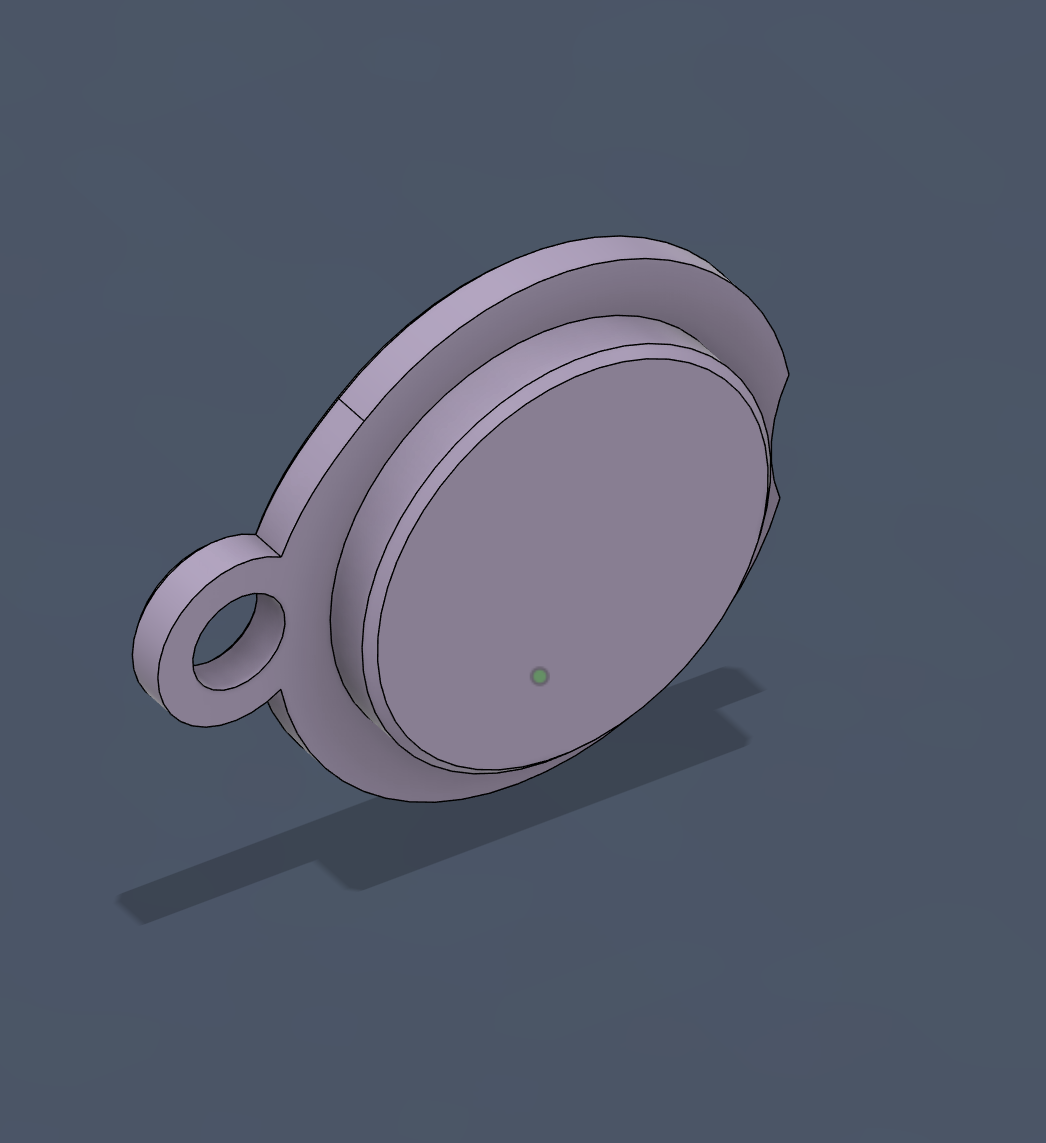
In addition to the drive shaft repair, several smaller hardware pieces were remade from scratch on manual equipment. A new front cap was also fabricated to complete the preliminary mechanical assembly.
On-Car Fitment and Front Cap Redesign
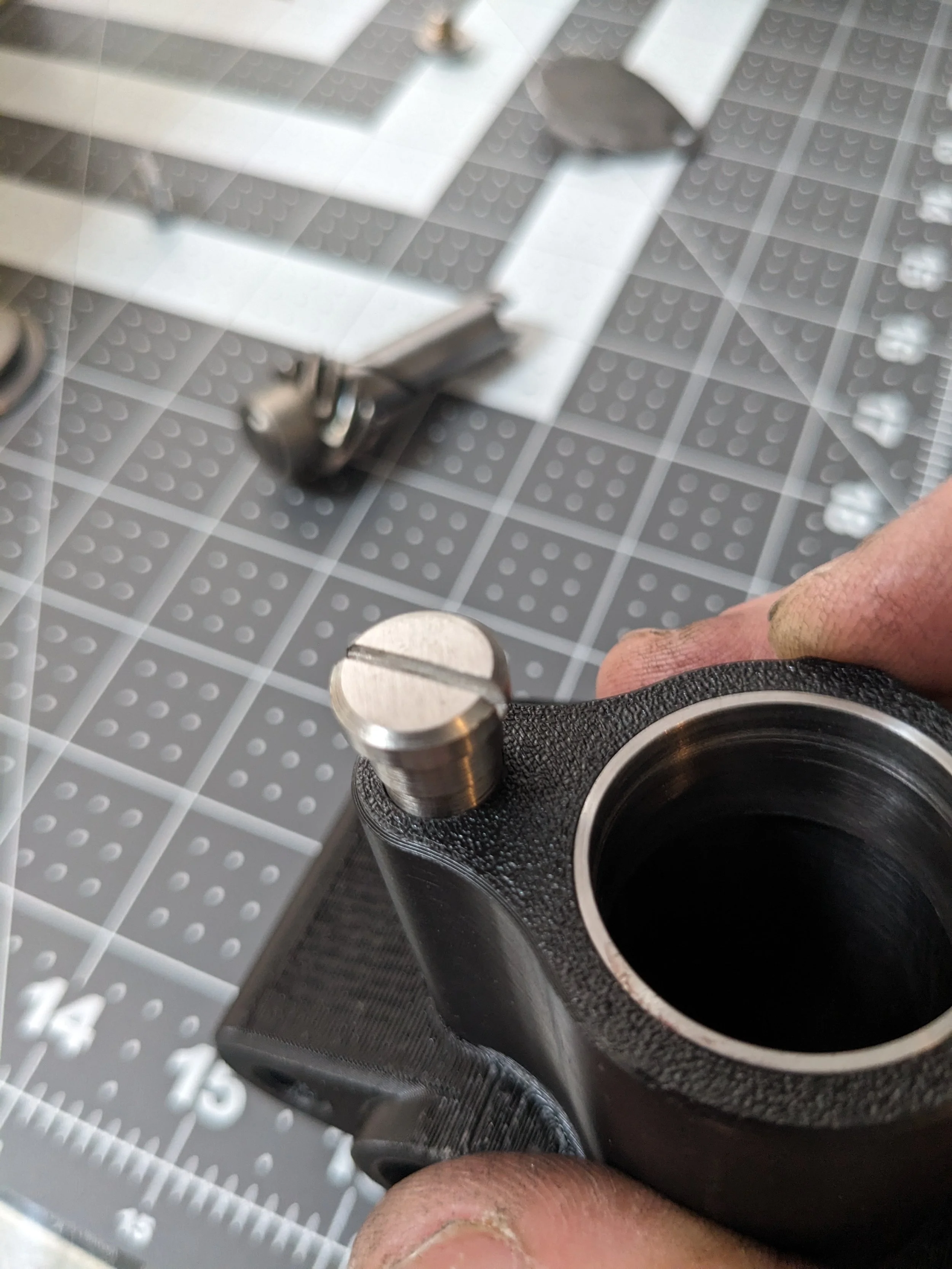
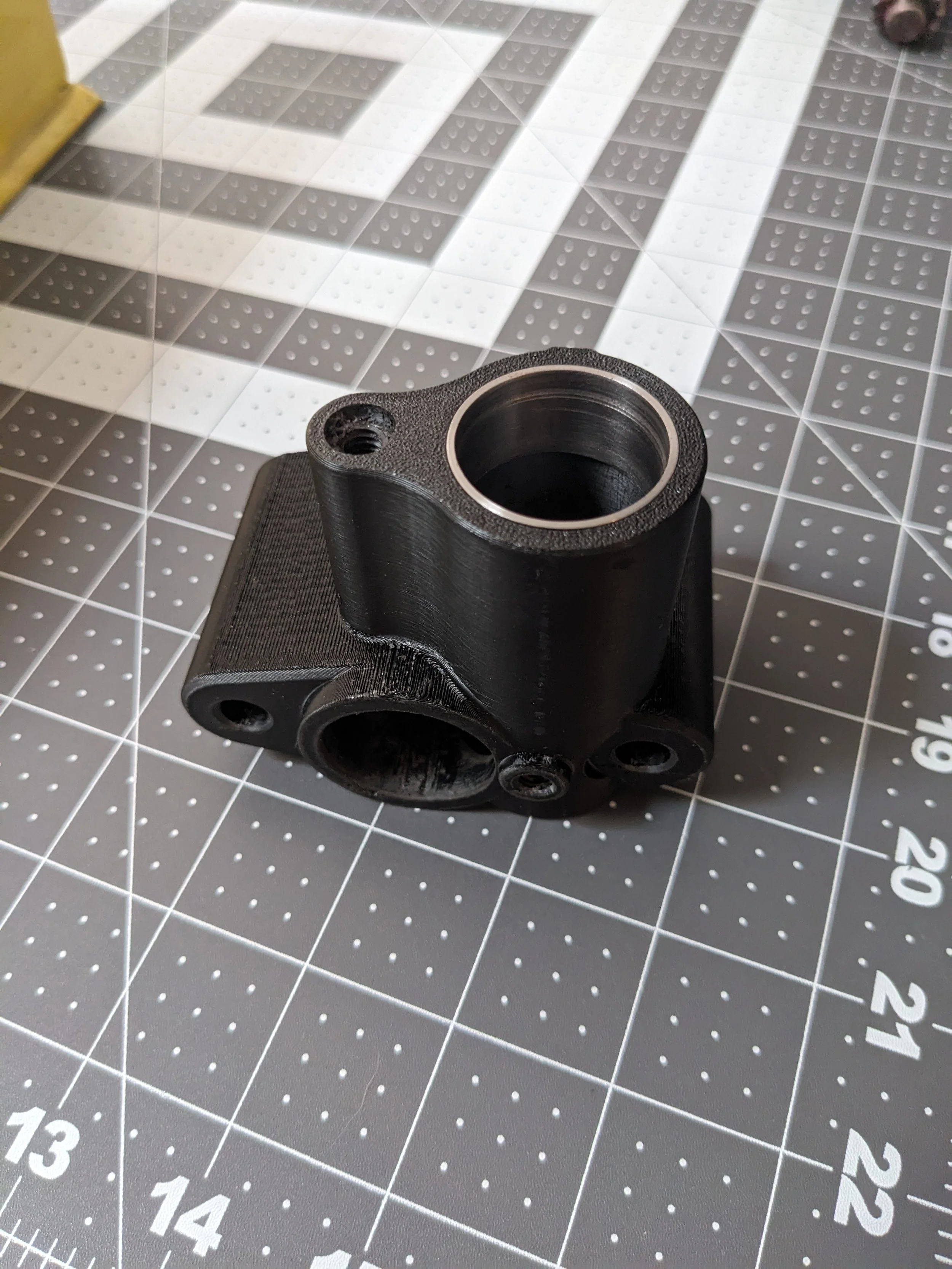
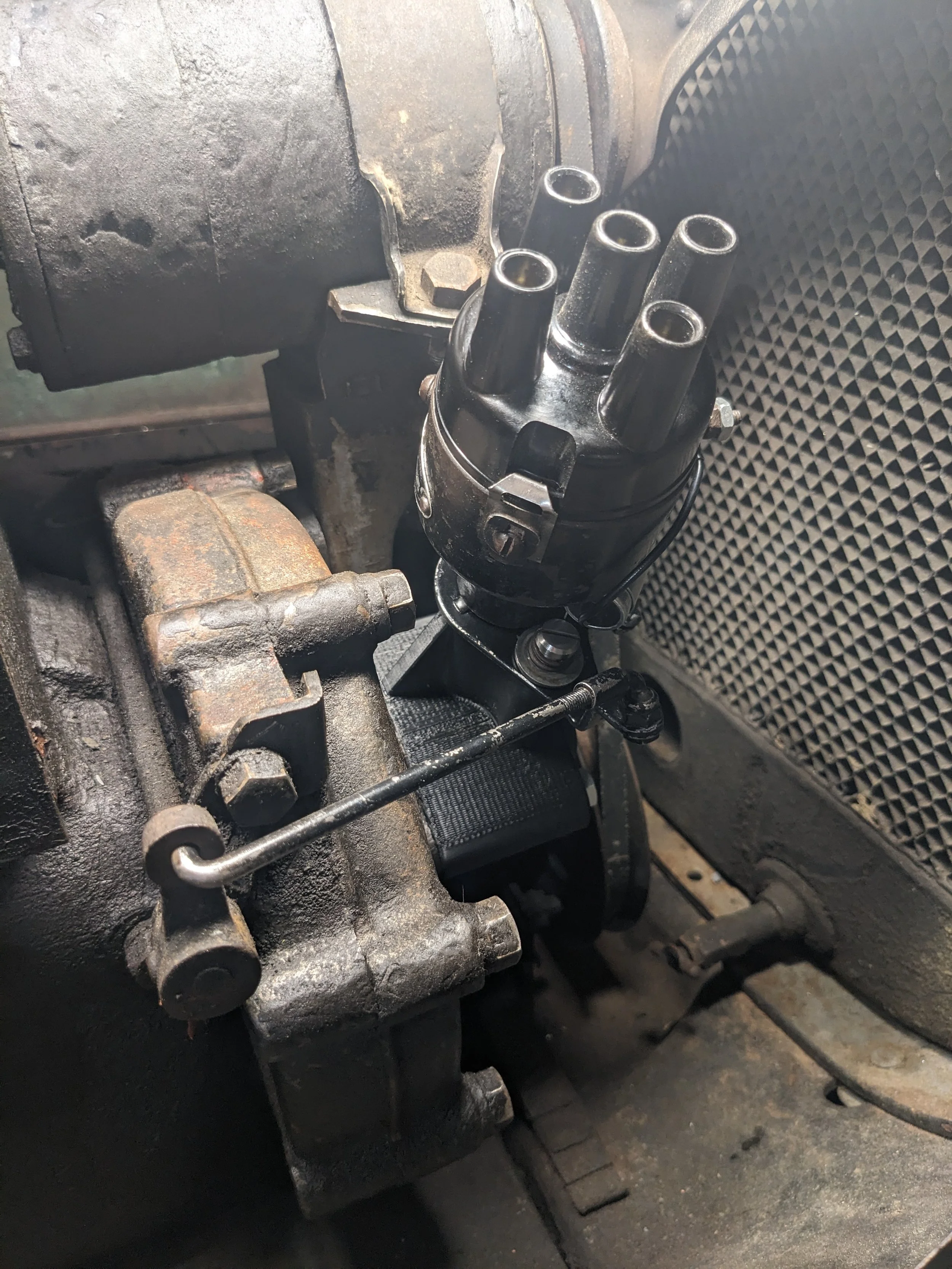
Before taking the plastic prototype to the car for fit-up, several critical features were manually machined to closer tolerances. While 3D printing handles complex housing contours well, precision shaft fits require tight machining tolerances. In particular, a custom sleeve was turned and installed in the main housing bore to establish a precise, wobble-free fit around the distributor stem, the mounting holes were reamed, and the bore that holds the driveshaft was reamed. A counterbore that was on one of the original equipment housings was added to the top face. It provides a locating fit for the shoulder of the pivot bolt for the advance mechanism.
When the 3D-printed plastic prototype was fitted onto the Chrysler 4-cylinder engine block, the overall alignment was evaluated. It was determined that one of the mounting holes needed to be moved slightly. At this time, it was also possible to check the fit of the step key and note the clearance for making a final step key.
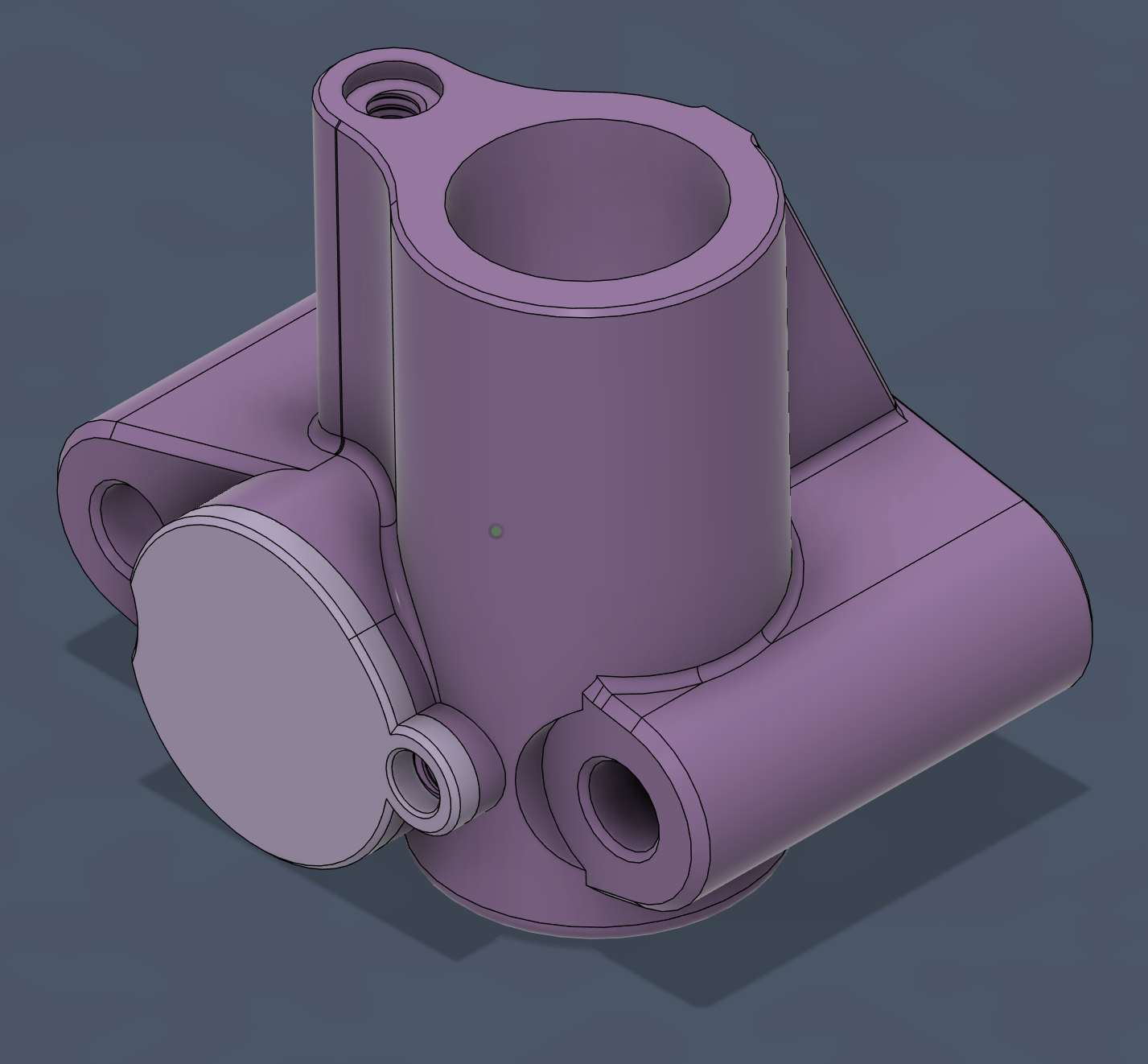
During physical fit-up, an opportunity to improve the front sealing assembly was identified. The housing model was updated to incorporate a redesigned cover plate with a flat gasket interface, preventing oil weeping and simplifying the front mounting configuration.
Final Manufacturing Steps
With the front cap redesign completed and model tweaks locked in, the prototype fitment is complete. The plastic prototype is accurate enough that the engine could likely run on it temporarily, but the final part will be laser-sintered 3D printed out of 316 stainless steel by a contracted third party.
Direct Metal Laser Sintering (DMLS) is an additive manufacturing process that builds fully dense metal components directly from a CAD file. Inside a sealed chamber flooded with inert gas, a bed of microscopic, atomized stainless steel powder is laid down. A high-powered fiber laser traces the exact cross-section of the housing, melting the metal particles together layer by layer. After each pass, a recoater blade spreads a fresh layer of powder just microns thick, and the laser repeats the process. Unlike plastic 3D printing, metal laser sintering produces a solid, non-porous stainless steel part with structural strength comparable to traditional machined bar stock. The texture of laser sintered parts is similar to a very fine casting, so it’s an excellent aesthetic as well as structural choice for this application.
Need an unobtainable vintage auto part reverse engineered or machined? Submit a custom quote request.